



:quality(85))
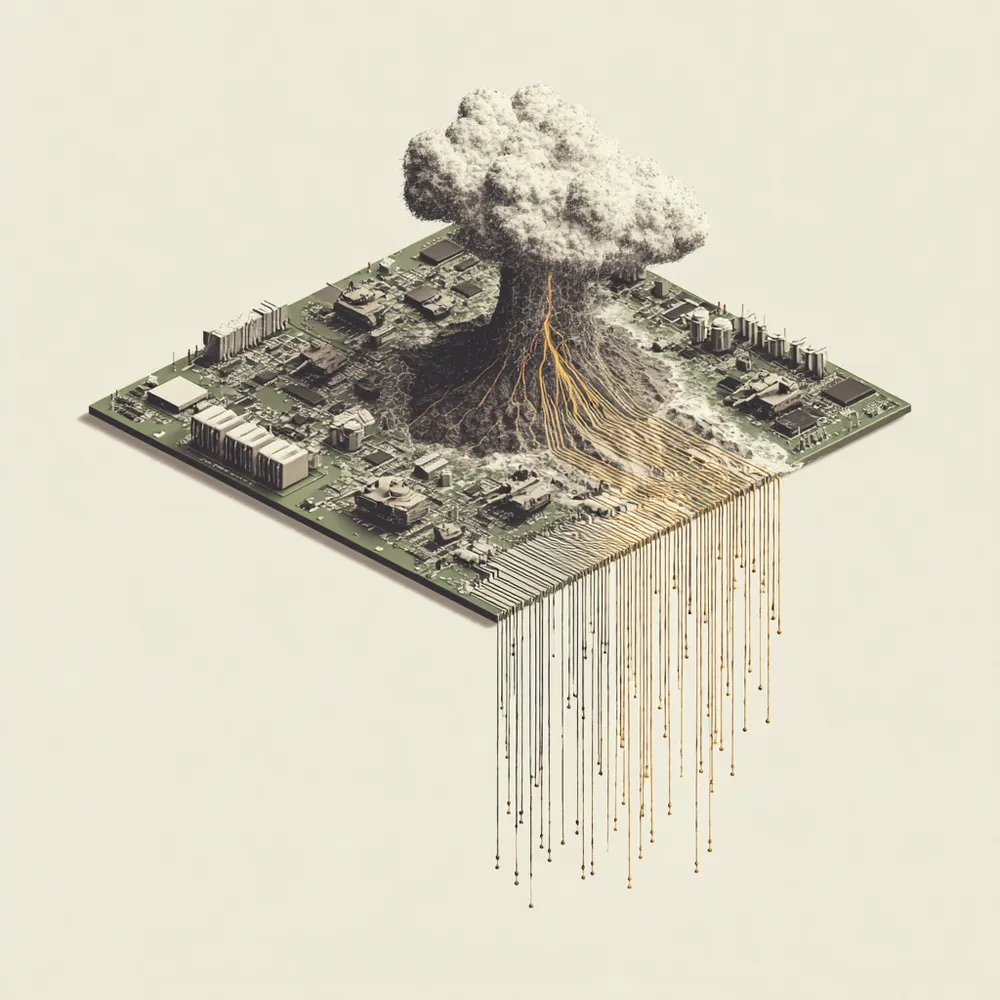
Over the past year or two, much has been made of the memory chip supercycle and resulting supply shortages. The market phenomenon has reached a fever pitch in 2026, as prices for memory products continue to surge and lead times stretch outward to 20, 24, or even 40 weeks. But while this high-profile sector of chipmaking is capturing gobs of media attention, another facet of the electronics manufacturing ecosystem is grappling with its own sourcing struggles: printed circuit boards (PCBs).
PCBs exist further along the supply chain, as the boards that memory chips, microcontrollers, power ICs, and other semiconductor commodities are soldered onto. All the industries that rely on chips—telecommunications, automotive, aerospace and defense, and consumer electronics, to name just a few—also need PCBs. And these printed circuit boards are currently facing their own production challenges, manufacturing issues that are straining availability, extending lead times, and driving up prices.
These supply issues stem from a myriad of causes—some but not all of which overlap with the challenges in the memory market. In short, the highly complex PCB supply chain is currently weathering a convergence of its own powerful headwinds, forces that are making these layered boards very difficult to consistently produce.
The Layers of a Printed Circuit Board
Before exploring the range of challenges PCB manufacturers are currently facing, it may be useful to briefly outline the different layers that go into these multifaceted electromechanical structures.
:quality(85))
1. Layer: Surface Finish
Function: Protects Exposed Pads
Raw Materials Required: Nickel, gold, silver, tin, palladium.
2. Layer: Silkscreen
Function: Labels and markings.
Raw Materials Required: Epoxy, acrylic ink, titanium dioxide pigment.
3. Layer: Solder Mask
Function: Insulates copper layers underneath.
Raw Materials Required: Epoxy acrylate resin, photoinitiators, barium sulfate, silica fillers.
4. Layer: Outer Copper
Function: Holding pads and containing traces.
Raw Materials Required: Copper foil, electroplated copper fabricated using copper anodes, copper sulfate, sulfuric acid.
5. Layer: Prepreg
Function: Bonds the layers of the PCB board together, and acts as an insulator between copper layers and their traces.
Raw Materials Required: Glass fabric soaked in partially cured resin, silica fillers, flame retardants.
6. Layer: Inner Copper
Function: Signal, power, and ground planes.
Raw Materials Required: Copper foil.
7. Layer: Copper Clad Laminate Core
Function: Works as the PCB’s structural backbone, provides insulation, and establishes impedance.
Raw Materials Required: Copper foil, glass fabric, fully cured resin.
8. Layer: Via
Function: Connects layers vertically, operating as structural columns in PCB.
Raw Materials Required: Tungsten carbide drill bits or lasers, electroless copper, electroplated copper, epoxy, copper fill.
The Surging Costs for PCB Raw Materials
As the eight basic layers of a PCB outlined above demonstrate, these structures require a wide range of raw and processed materials. The unique material requirements are a large part of why PCBs are currently facing a major supply squeeze: challenges to the extraction, processing, or production of any of these substances can quickly reverberate through the PCB supply chain, reducing availability and in some cases jeopardizing production.
Below, we take a look at the PCB materials dealing with the most significant bottlenecks right now.
Material | Market Impact |
Copper-Clad Laminate | Prices for mainstream CCL grades are up more than 270% year-over-year, with lead times up to six months long. Major manufacturers like Kingboard, Shengyi, MGC, Resonac, EMC, and TUC are all in allocation. |
Prepreg | Costs are rising fast. For some manufacturers, prices have increased around 180% from August 2025 to August 2026. |
Copper cathode and standard foil (HTE, RTF) | The price of copper has risen sharply in 2026. Copper has been priced around $6.64 per pound in September, a 37% increase from 12 months earlier. Prices in 2026 have been on average around 40% higher than 2025 figures. |
E-glass fabric (7628, 2116, 1080) | Prices for glass fabrics have increased roughly 140% from the third quarter of 2025, immediately before supply started tightening. |
Epoxy resin | Lead times have increased several-fold, going from three weeks to 15 for some producers. |
Sulfur and sulfuric acid | Bottlenecks at the Strait of Hormuz, as well as Chinese export restrictions, throttled availability and drove up the price of sulfur and sulfuric acid in the first half of 2026. Prices rose as much as 120% for sulfur and 160% for sulfuric acid, but have since leveled off somewhat. |
The Forces Throttling the PCB Supply Chain
So what’s causing all this turbulence to the materials that go into printed circuit boards, triggering increases to prices, lead times, and availability? Unlike the memory chip shortage, which can largely be attributed to one or two primary drivers, the bottlenecks in the PCB supply chain are more sprawling and multifaceted.
As with many topics related to the electronic supply chain these days, the inescapable starting point is with artificial intelligence. AI data centers and the servers they house use an enormous amount of printed circuit boards—according to some estimates, a single AI server requires 10 to 15 times the amount of PCB materials as a conventional server. Along the same lines as the dynamics controlling the memory chip market, PCB producers are currently prioritizing their AI customers, leading to longer lead times and strained availability for the rest of the market. Rather than squeezing the supply of a single material or layer, this has had an overarching impact on the entire supply of printed circuit boards and their materials.
The next factor is a limited supply of woven fiberglass, including the highly specialized varieties used for PCBs. The low-CTE and low Dk (dielectric constant) glass used for boards is primarily produced by a single company, Japanese manufacturer Nittobo. Nittobo is responsible for manufacturing around 90% of the total low-CTE fiberglass, and between 60% and 70% of the low-Dk glass. So while demand has been driven up by AI companies and the data centers and servers they’re building, capacity has not been able to expand in stride. Further, as PCB substrates continue to grow in size, they’re requiring larger quantities of fiberglass.
While Nittobo is working to expand its manufacturing capacity, the scaling limitations associated with a single company mean that the supplier is only expanding its production by around 20% year-over-year—a far cry from matching the increase in demand for its critical material. A larger manufacturing expansion is planned for 2027.
As mentioned earlier, the price of copper has also been rising steadily over the past year. Copper mining has not been able to keep up with the enormous demands for the metal from industry, and the Section 232 tariffs imposed on copper goods by the Trump administration has further strained supplies. As one of the primary materials used in PCB manufacturing, this has predictably impacted supply chains, driving prices up for boards of all kinds.
Finally, the Iran War has impacted petrochemical production in the Middle East. There’s been some discrepancy on this topic, as Reuters published and later retracted reporting suggesting that missile strikes forced petrochemical manufacturer SABIL to shut down production of PPE resin. But even with the uncertainty surrounding SABIL’s operational status, global manufacturers still draw from Middle Eastern supply chains for sulfur and sulfuric acid, sourcing that has been impacted by the conflict. In addition, many Asian manufacturers rely on Middle Eastern oil and energy products, and the bottleneck that’s persisted in the Strait of Hormuz for much of the year has driven up the cost of those energy commodities.
Navigate PCB Chokepoints With Data Intelligence and Expertise
Companies that manufacture or source printed circuit boards have seen the various supply chains that support PCB production under duress this year. Businesses that are able to navigate the resulting higher prices and uncertain availability with a strategic approach to risk are going to have a major advantage when it comes to stabilizing their procurement and protecting their production continuity.
Supply chain risk management (SCRM) software Z2 can help businesses see the electronic supply chain with maximum visibility and insight. Z2 features a database of over one billion electronic components, including 1,000+ commodity types for parts based on technical attributes. With this database, users can conduct parametric searches using a wide variety of attributes and criteria, allowing them to search for components based on not only parametric features but also manufacturing details, country of origin (COO), compliance statuses, and lifecycle forecasts.
In addition, Z2 provides users with comprehensive market information that allows them to understand market trends, patterns, and underlying dynamics, providing the intelligence and insights crucial to making informed, strategic procurement decisions. Electronic supply chain market data includes information on:
Market availability
Pricing
Lead time
Inventory
Cost and availability of cross-references
To learn about how Z2 can help businesses strategically source PCBs in the current market, schedule a free trial with one of our product experts.