Z2’s analysis of the copper-clad laminate disruption: what we know so far, who sources from the facility, and how far the impact reaches down the supply chain.
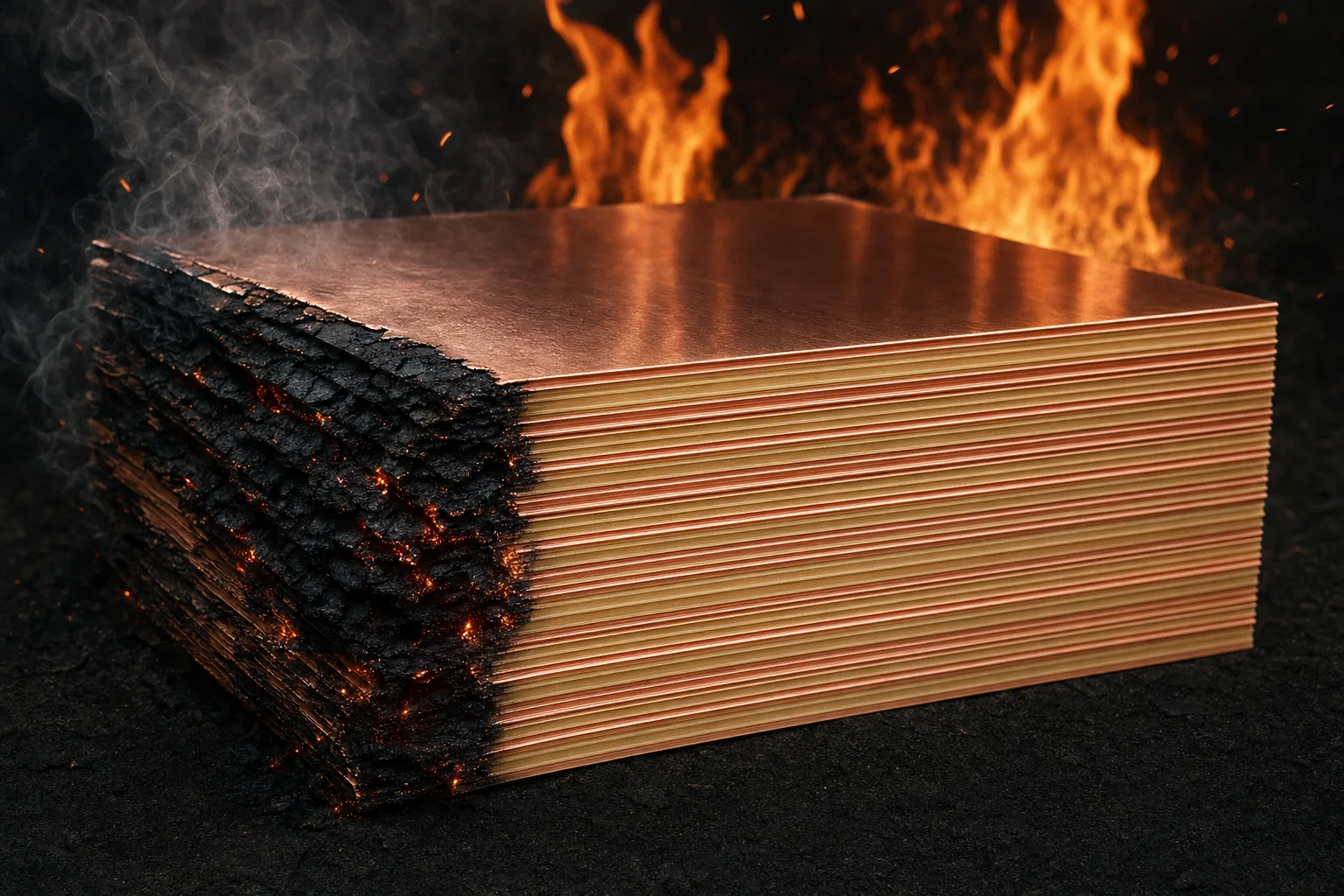
On Wednesday, November 4, a fire broke out at a copper-clad laminate factory in Hukou, Taiwan, operated by Panasonic Industrial Devices Materials. The fire triggered explosions in the facility, leading to five injuries and two deaths.
Since the incident, Panasonic has disclosed little about what happened or the operational status of the factory. While no official determinations as to the cause of the fire have been made at this point, the strongest speculation has been that the fire and subsequent explosions were triggered by flammable chemical solvents, including methanol and methyl ethyl ketone.
The Panasonic factory processes copper-clad laminate (CCL), a material critical to PCB manufacturing. Initial projections suggest that the industrial disaster and resulting supply chain disruption could impact as much as 4% of the global supply of semiconductor-grade CCL.
The 4% estimate comes from two key figures associated with Panasonic and its high-end CCL production:
It’s important to underscore that the 4% figure remains largely speculative. The actual on-the-ground CCL market share for the Panasonic factory could be markedly different. Nevertheless, it’s one of the main estimates that tier 1 suppliers, original equipment manufacturers (OEMs), and other semiconductor supply chain stakeholders have to work with right now.
Because the Panasonic factory processes copper-clad laminate, its primary customers are PCB fabricators. The facility is also known to produce the type of high-end, low-loss CCL that’s in high demand as a material for the boards that go into AI servers and related networking infrastructure.
Based on a Z2 analysis, the facility’s customers span a wide range of countries, industries, and market capitalizations. Here are some key data points to put the potential impact of the disruption into perspective.
The vast majority of the organizations in our data analysis that source from the Panasonic CCL factory are PCB fabricators. The most represented sectors include:
For original equipment manufacturers and other organizations operating at the bottom of the supply chain, the Panasonic CCL factory would be considered a tier 2, tier 3, or even tier 4 supplier. The facility supplies the copper-clad laminate that goes into the printed circuit boards made by PCB manufacturers, who then sell those boards to OEMs and other comparable businesses.
To understand the downstream impact of the Panasonic fire, we looked at all the tier 1 manufacturers in our database who source CCL and other processed materials from the Panasonic facility. We then analyzed the number of customers in our database who source from those potentially affected tier 1 suppliers.
What we found was that, while the disruption may appear highly localized and limited at the second tier, its scope widens substantially further down the supply chain. We identified over 970 companies that source from one or more of the tier 1 suppliers that source from the Panasonic facility.
Below are the five tier 1 suppliers connected to the Panasonic facility with the most customers in our database:
While there isn’t a lot of confirmed information on how the Panasonic fire is impacting customers and their orders right now, a raft of supply chain signals suggest that the disruption is already influencing sourcing decisions. In the days immediately after the accident, industry reporting indicated that Panasonic customers were taking two reactive risk mitigation measures:
If carried out on a large enough scale, both of those strategies could reverberate across the supply chain, further straining a semiconductor manufacturing ecosystem that’s already stressed by demand and capacity concerns. As it is, copper-clad laminate is tight globally—prior to the fire, one U.S. distributor reported that some MEGTRON products were already on allocation—and businesses scrambling to secure more of it could tighten that supply further.
Fortunately, there’s an important caveat here, one that could mitigate the potential fallout and salvage existing orders to Panasonic. The manufacturer could theoretically reallocate production to several other of its plants specializing in CCL, including one in Japan, two in China, and a fourth in Thailand.
Until we hear any official updates from the company, though, customers at multiple supply chain tiers will continue to be left in the dark, forced to speculate on consequences and act based on the assumptions and visibility available to them right now.
OEMs, tier 1 manufacturers, and other organizations that rely on the high-end CCL fabricated by Panasonic should not wait for guidance from the company, which little evidence suggests is forthcoming. Instead, they should take two critical risk mitigation measures:
Businesses that source from suppliers who source CCL from Panasonic should check with their supplier and assess that manufacturer’s exposure. Organizations should be as clear and direct as possible when making inquiries, and ask for confirmation as to whether their supplier sources their CCL from Panasonic and/or the inoperative facility.
Companies that source directly from Panasonic should start qualifying alternate sources for copper-clad laminate.
Z2’s risk management platform offers a number of capabilities that can help businesses navigate this actively developing supply chain disruption:
To learn more about Z2, Supplier Insights, and Part Risk Manager, schedule a demo with one of our product experts.
See how Supplier Insights maps your sub-tier suppliers to the Panasonic Hukou facility.
Get a Demo